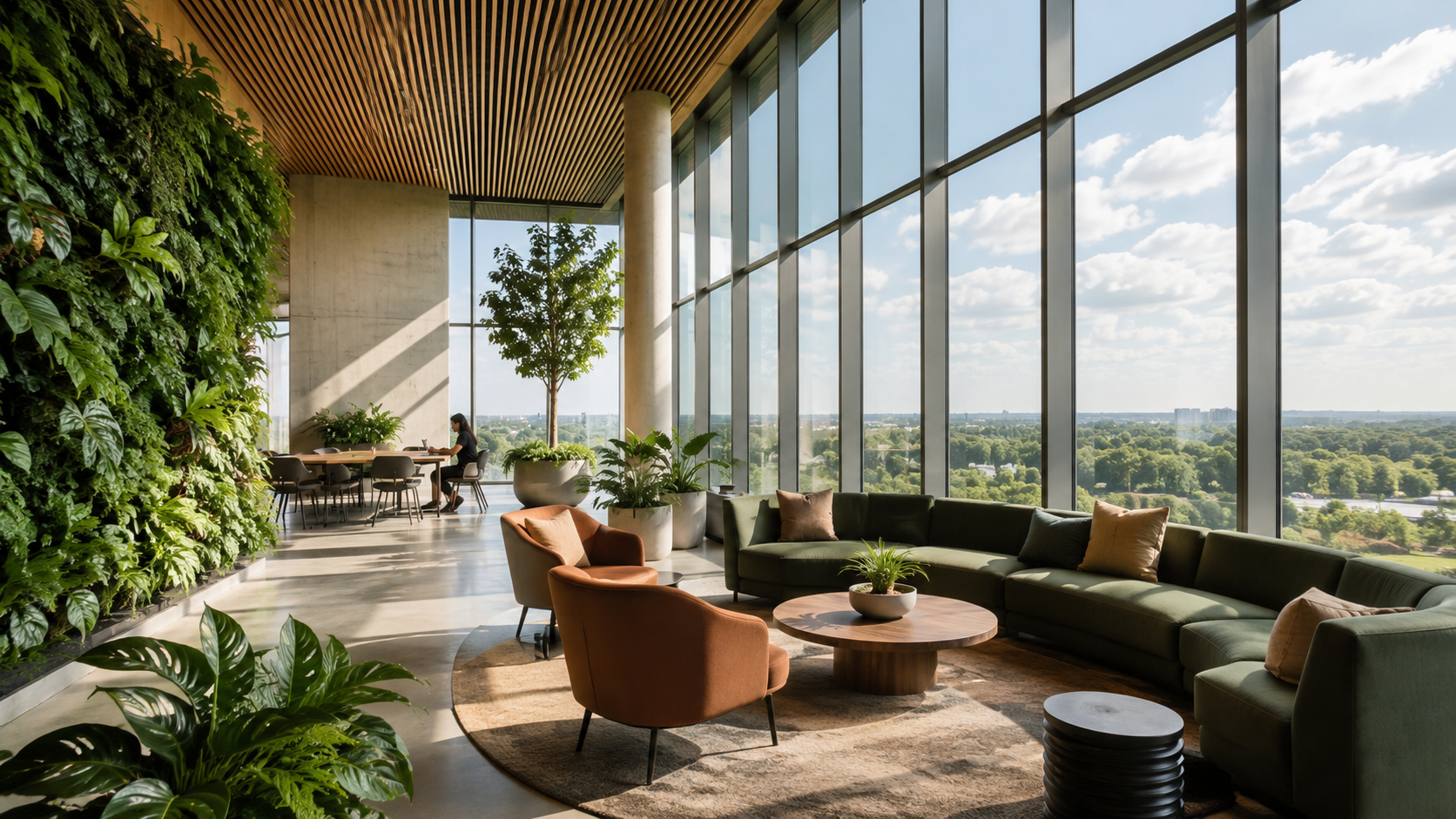
Biophilic design: people, not just machines.
People-oriented design is central to our approach. We embrace biophilic principles in our offices and client projects to improve occupant wellbeing — and the evidence base is now substantial enough to treat this as a measurable design strategy, not an aesthetic position.
01 / SectionWhat the data shows.
Studies find that employees in green environments report up to 15% higher wellbeing and creativity. One widely cited study showed workers in plant-rich offices were 6% more productive than those in baseline conditions. We take these findings seriously in our designs.
02 / SectionDaylight and views.
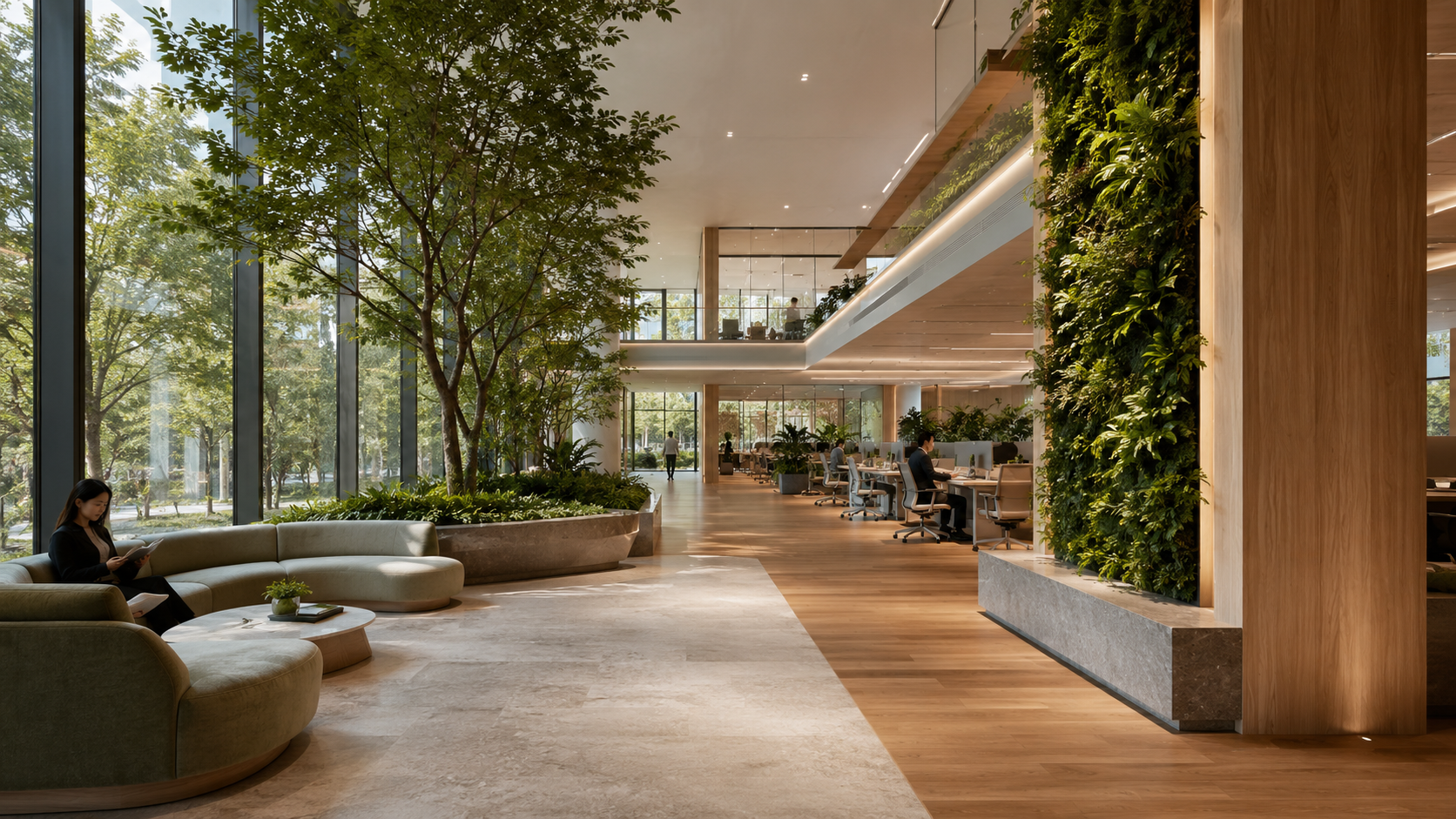
We orient floorplates and design layouts so workstations receive ample natural light, reducing reliance on artificial lighting and supporting occupant circadian rhythm. Views — to landscape, courtyards, or even to green rooftops — are incorporated where the site allows.
When people feel better, business performs better.
03 / SectionIndoor greenery as standard.
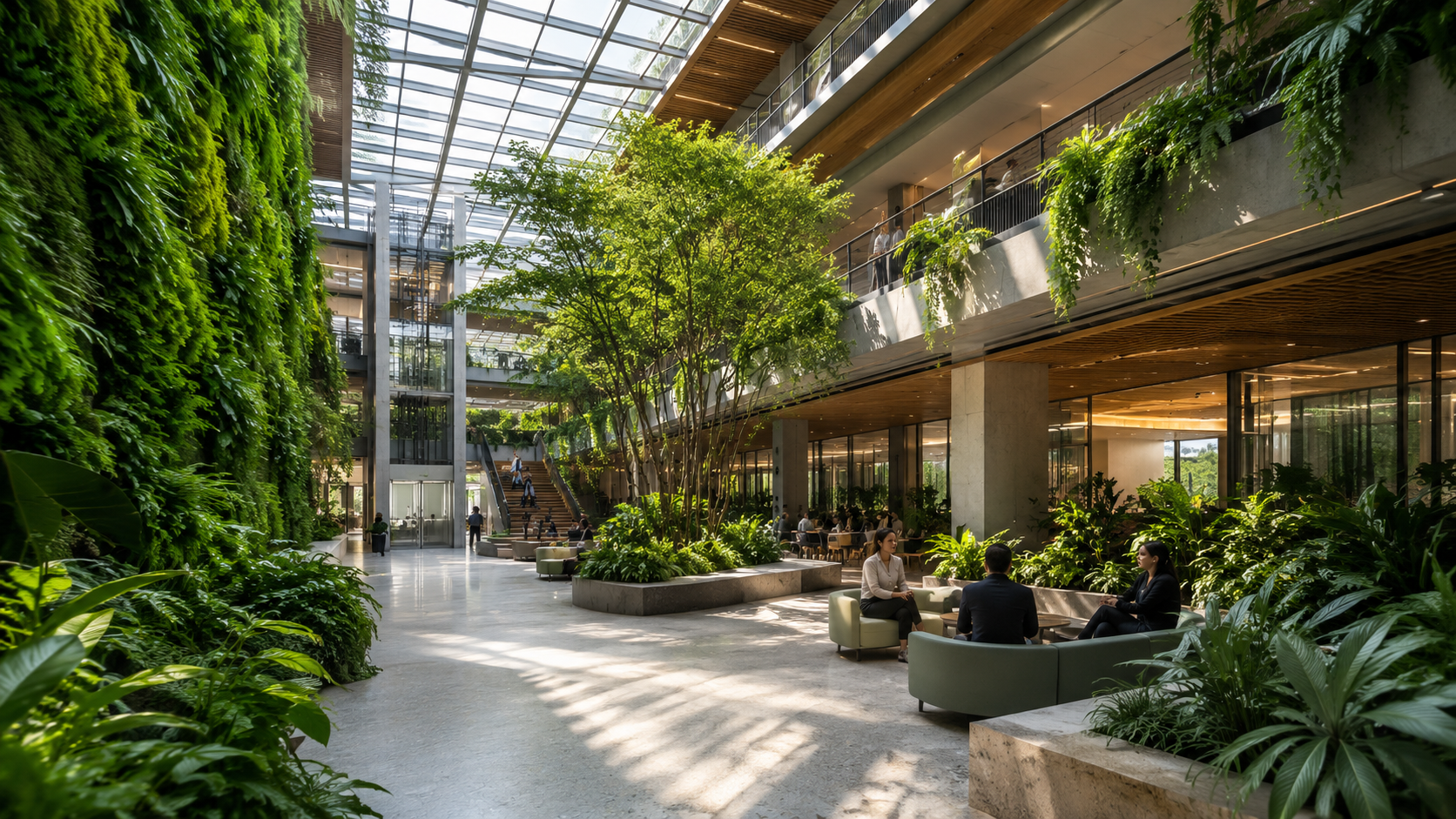
Our standard practice includes indoor planting in lobbies, breakout zones and open-plan areas. On one office project, a central atrium filled with living walls became an informal gathering space that staff genuinely use — unlike the meeting rooms that were specified to be the gathering space.
04 / SectionComfort and flexibility.
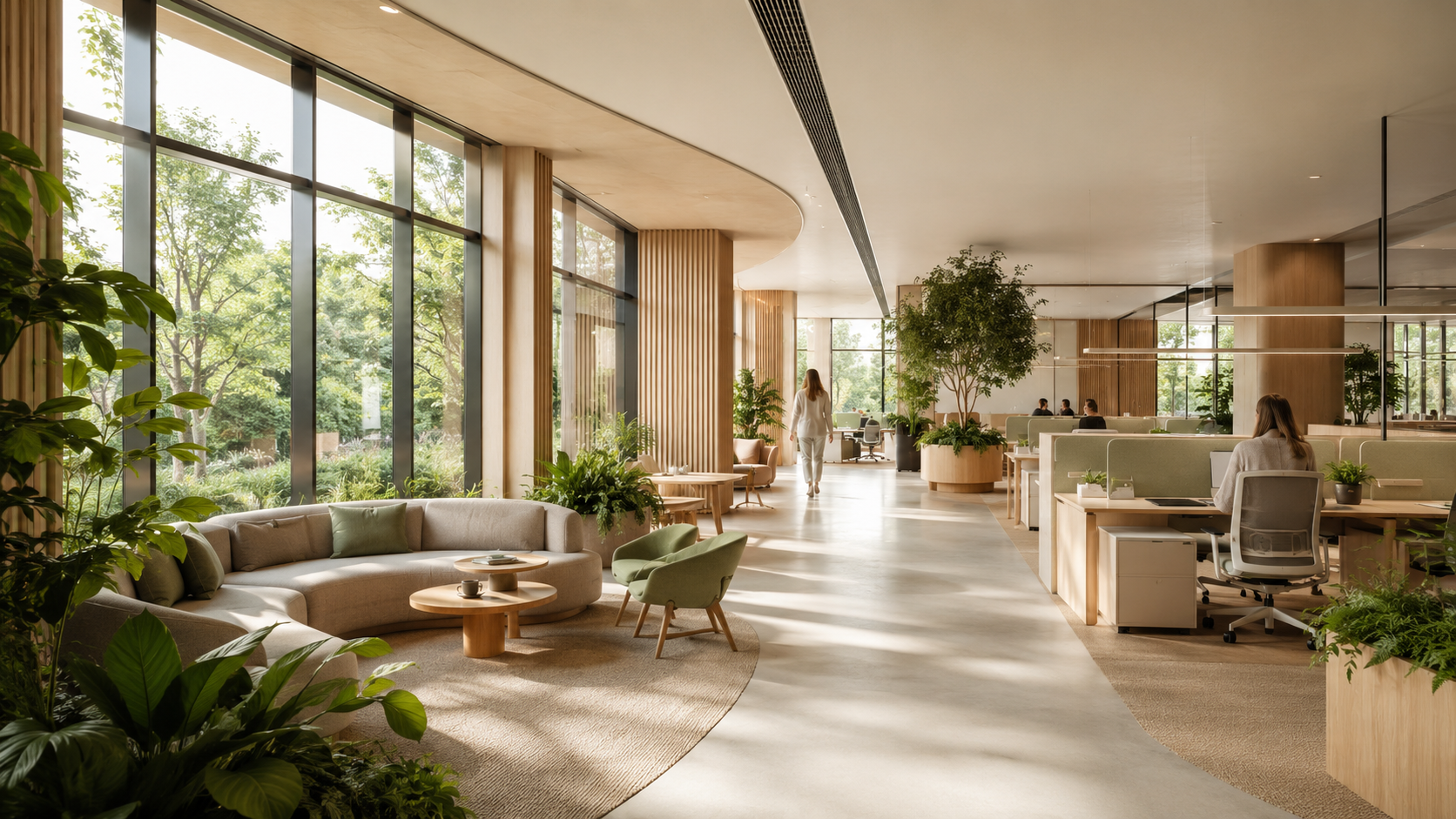
Adjustable workstations, quiet zones, communal areas — all contribute to a workspace that fits how people actually work, not how organisational charts assume they do. We consult with future occupants to ensure the space supports the operational reality of the team.
Investing in occupant experience pays dividends. Healthier, happier teams are more engaged, sick-days correlate with biophilic environments, and talent attraction is materially affected by workplace quality. Designing offices with humans in mind — not just machines — produces measurably better business outcomes.