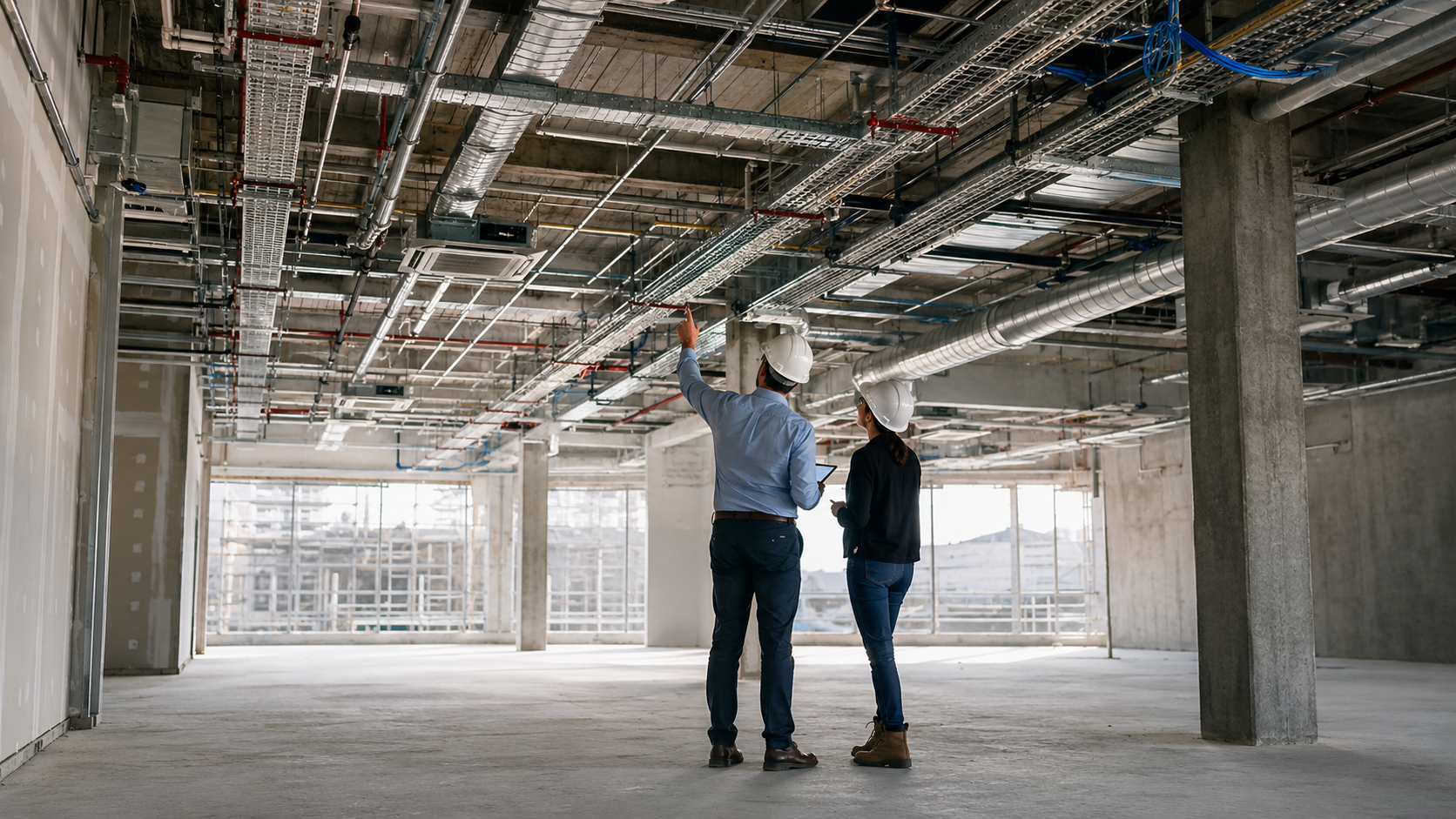
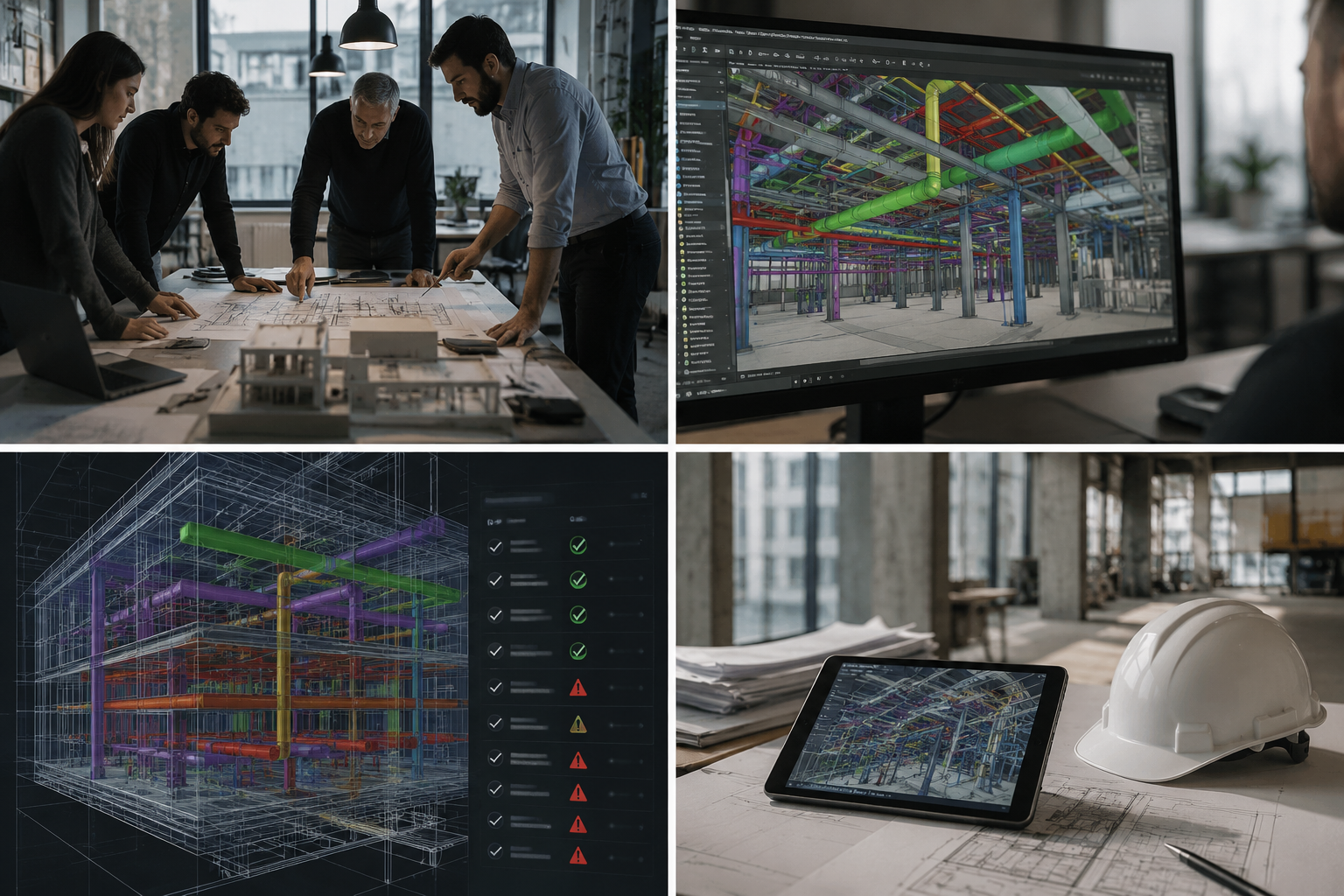
Integrated design: architecture & MEP, in one room.
Integrated design is a cornerstone of how we work. At LANE, architects and MEP engineers are in the same conversation from the project outset — and the difference, measured in clashes, RFIs and on-site rework, is not subtle.
01 / SectionWhere uncoordinated design costs money.
Industry reports indicate that uncoordinated design pushes 5–9% of a construction budget into on-site revisions. That is the visible cost. The less visible cost is the schedule loss — RFIs that stall trades, sequence problems that ripple through the programme, and the steady erosion of design intent through field-resolved compromises.
We eliminate most of this waste digitally, before construction. Our BIM workflows identify and resolve well over 90% of spatial clashes in the office, so site crews can build smoothly.
02 / SectionClash-free models.
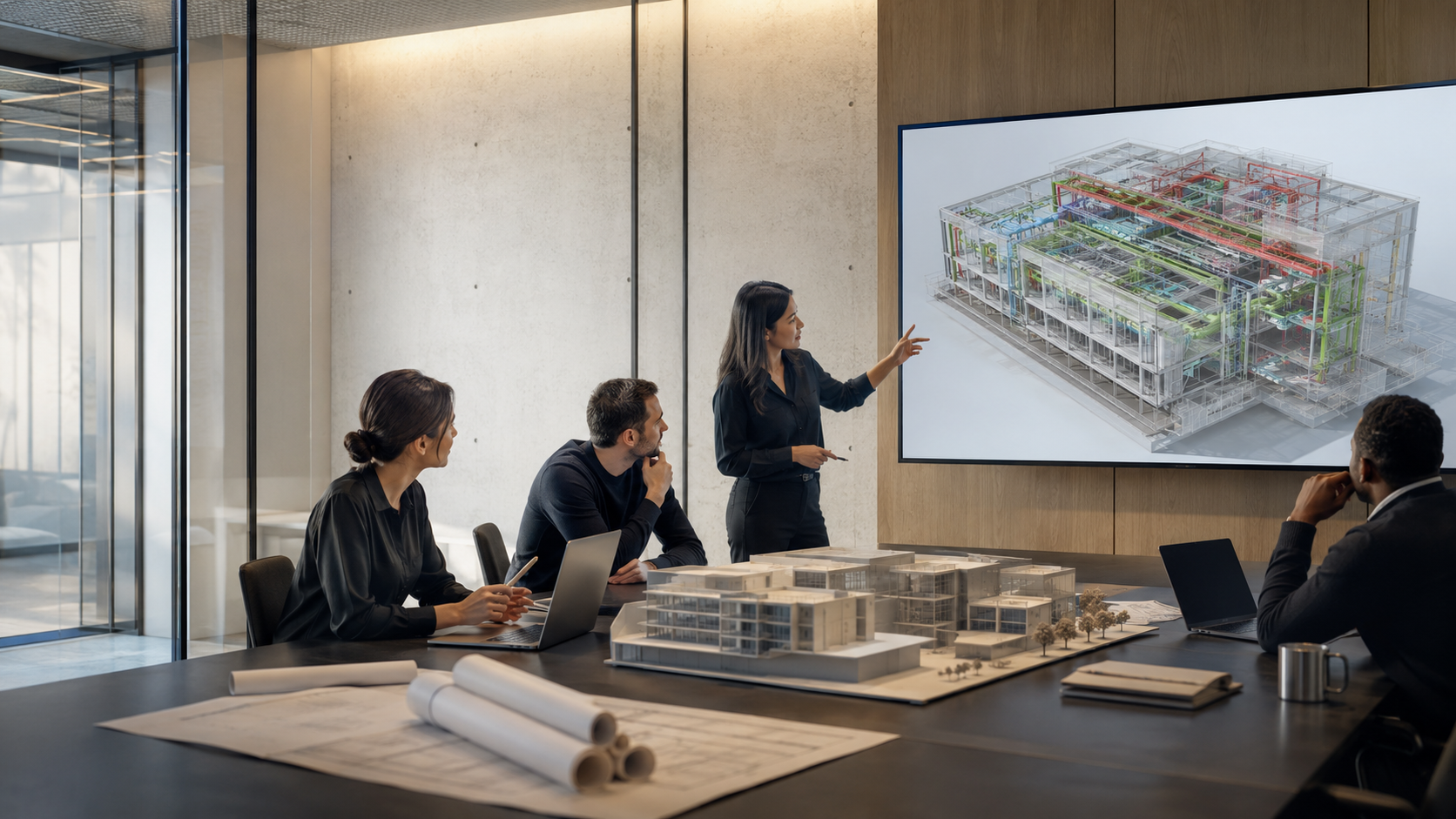
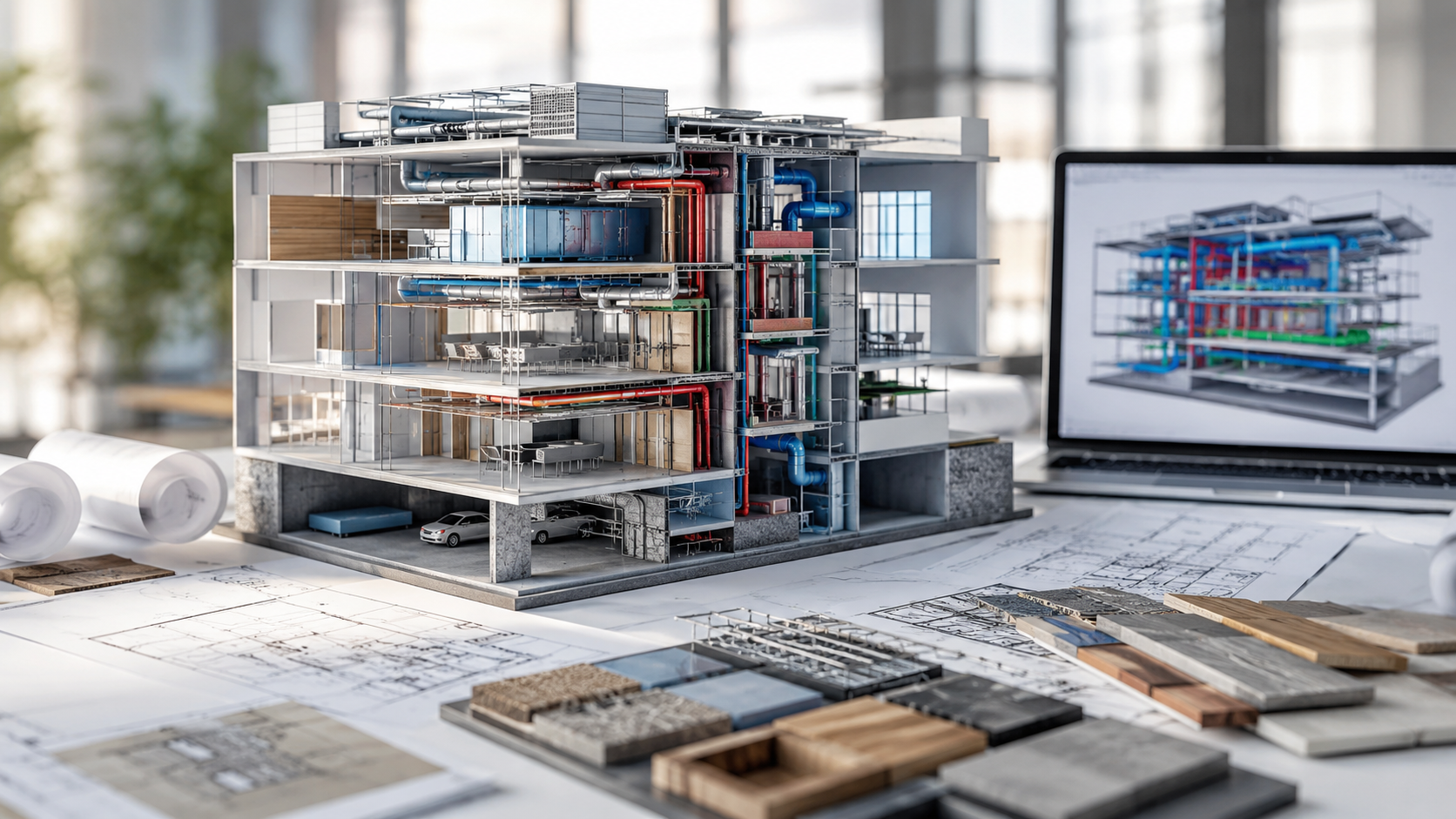
Using shared 3D models, we overlay architectural, structural and MEP plans. Any pipe penetrating a duct, conduit running through a beam, or fixture conflicting with structure is caught early and adjusted at design speed — not at site speed.
The cost of resolving a clash on a model is measured in minutes. The cost of resolving the same clash on site is measured in days, and sometimes in re-issued drawings.
- 01 / BenefitSpatial clashes resolved at design speed, not site speed.
- 02 / Benefit~40% reduction in RFIs during construction.
- 03 / BenefitSingle coordinated model — all disciplines reference the same truth.
- 04 / BenefitSchedule certainty improves; change-order exposure drops.
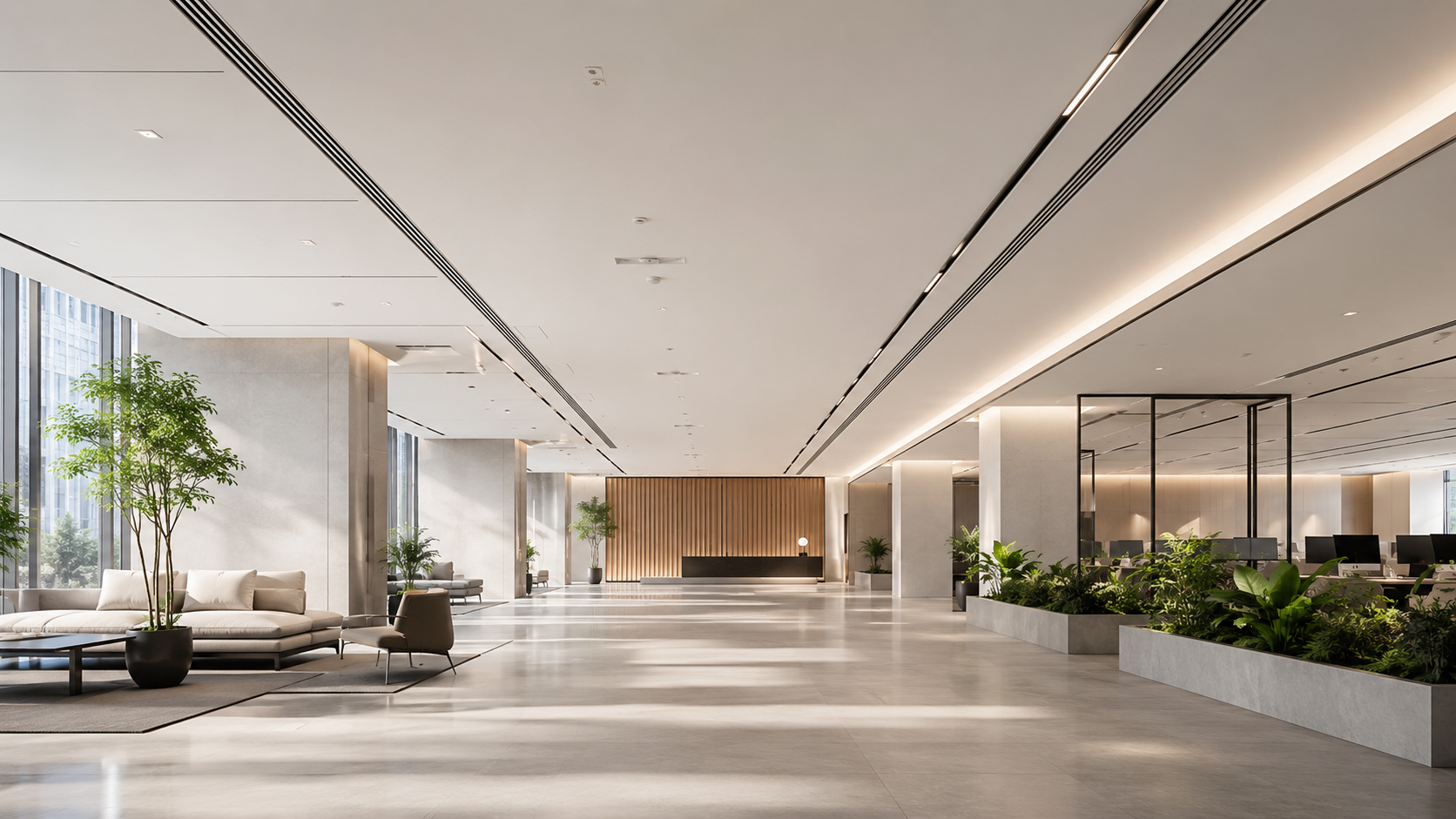
The cost of resolving a clash on a model is measured in minutes. On site, in days.
03 / SectionCost and time savings.
Coordinated design means fewer Requests for Information during construction. Industry studies show projects with robust MEP coordination see roughly a 40% reduction in RFIs. The savings flow directly into schedule and change-order budgets.
On a recent industrial warehouse project, an in-house team of architects and engineers collaborating closely delivered a 25% faster construction phase compared to similar previous projects. Because the team shared a table — literally — dozens of small design trade-offs were resolved during design meetings rather than on site.
04 / SectionSingle source of truth.
All trades refer to the same up-to-date model. If we change a wall location, the software automatically updates affected ducts, cable trays and structural openings. This single-source-of-truth approach reduces the kind of error that comes from out-of-date paper sets circulating between disciplines.
Integrated design at LANE is not a marketing position. It is the practical reason fewer surprises arrive late in the programme — we spend up front, to save time and money later.