Smart buildings & IoT integration.
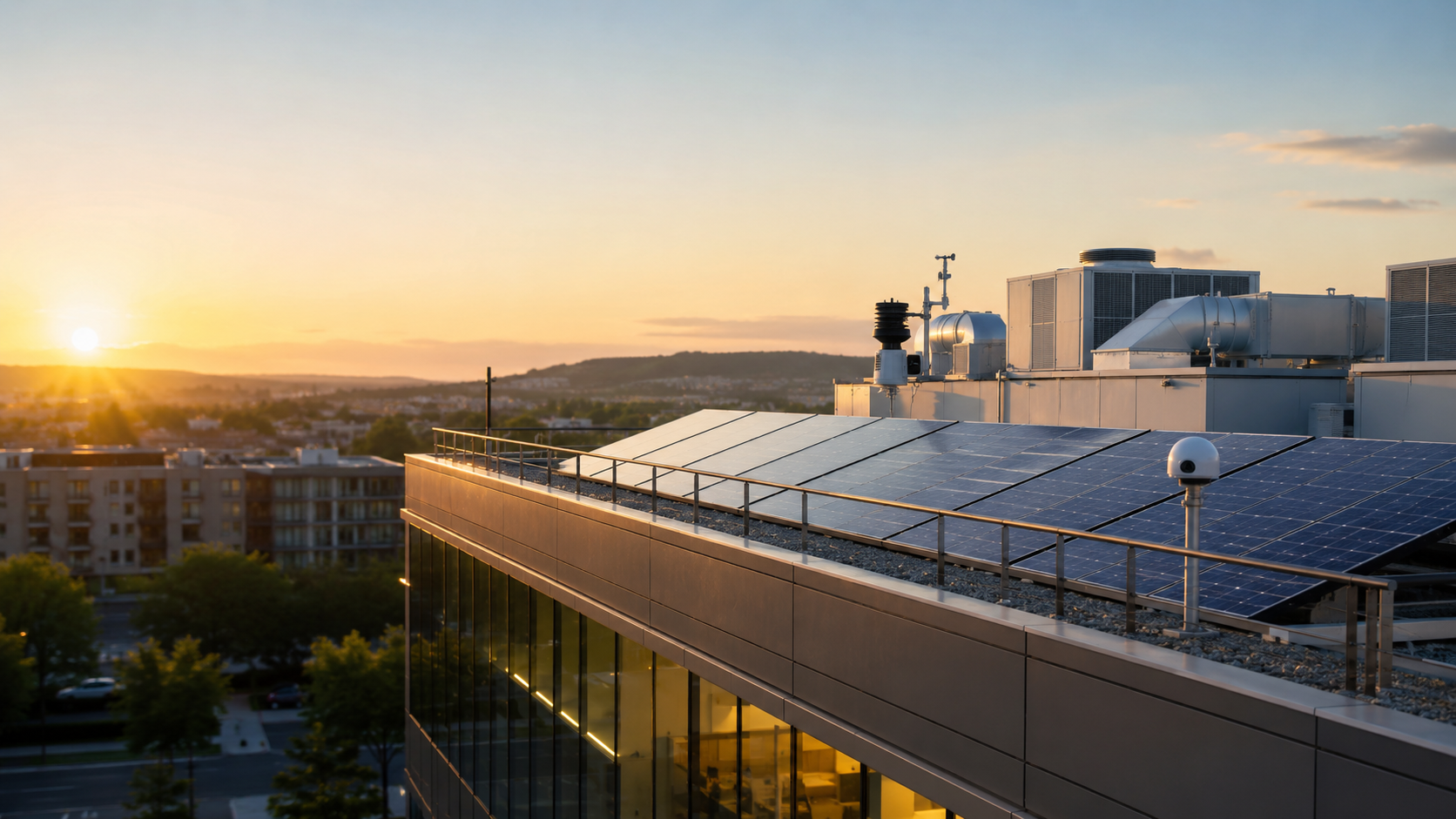
At LANE, we treat the Internet of Things as a structural change to how buildings are designed and operated — not as a layer added at handover. By embedding sensors and actuators throughout a building, structures become live assets that continuously collect, analyse and optimise their own performance.
01 / SectionReal-time control over the building envelope.
IoT devices continuously monitor environmental conditions — temperature, humidity, occupancy, daylight. Connected to a centralised Building Management System (BMS), they enable adjustments that no manual schedule can match. Cooling drops in unoccupied zones; lighting dims when daylight is sufficient; ventilation reacts to actual CO₂ readings, not assumed loads.
For us, this is the baseline of a defensible energy strategy. A robust IoT energy management system centralises disparate data streams and provides the transparency needed to materially reduce operational costs.
- 01 / LayerSub-metering — energy, water, gas at zone or system level.
- 02 / LayerEnvironmental monitoring — temperature, humidity, CO₂, occupancy.
- 03 / LayerEquipment telemetry — vibration, pressure, runtime, health.
- 04 / LayerBMS integration — data normalised, alerts surfaced, actions triggered.

02 / SectionPredictive maintenance.
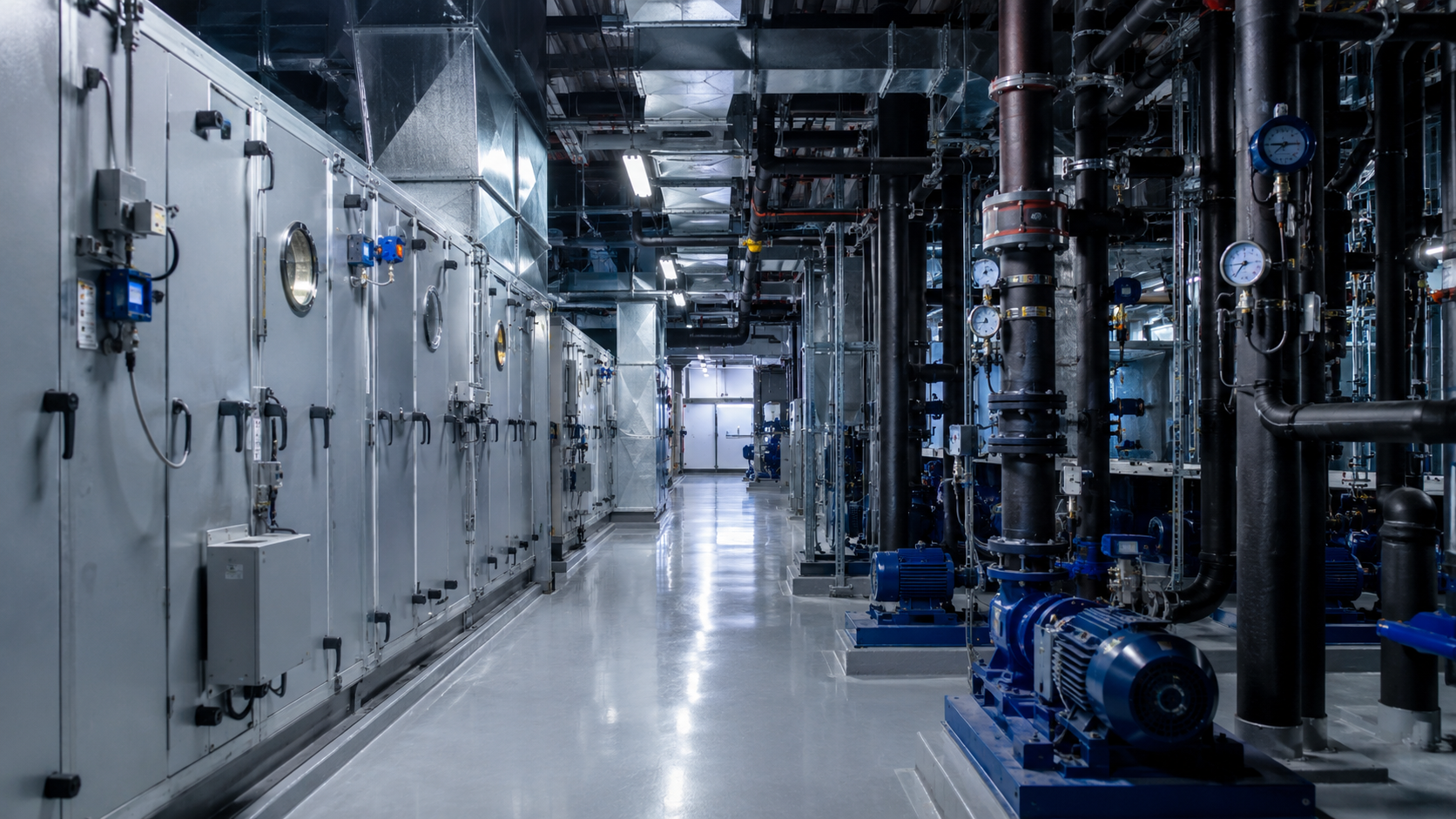
Sensors detect equipment anomalies — unusual vibration in a fan, pressure drift in a pump — before they become failures. The system flags the issue, scheduling intervention while the asset is still healthy. The economic case is straightforward: an unplanned shutdown on a logistics site costs orders of magnitude more than a planned service window.

Buildings become live assets that continuously collect, analyse and optimise their own performance.
03 / SectionAnalytics and benchmarking.
Historical data from connected devices allows performance analysis at a level conventional metering cannot provide. Over time, we identify patterns — peak loads, inefficiencies, drift in equipment performance — and feed them back into design assumptions for future projects.
04 / SectionA practical case.
On a recent commercial facility, IoT-based energy monitoring enabled faster fault resolution and a leaner maintenance schedule. Solar generation and HVAC consumption were tracked continuously, allowing load shifting to off-peak hours. Utility costs dropped significantly within the first operational year.
For us, smart-building IoT integration is a tool to meet sustainability goals, lower lifecycle cost and protect occupant comfort — three objectives that are no longer in tension when the data infrastructure is right.