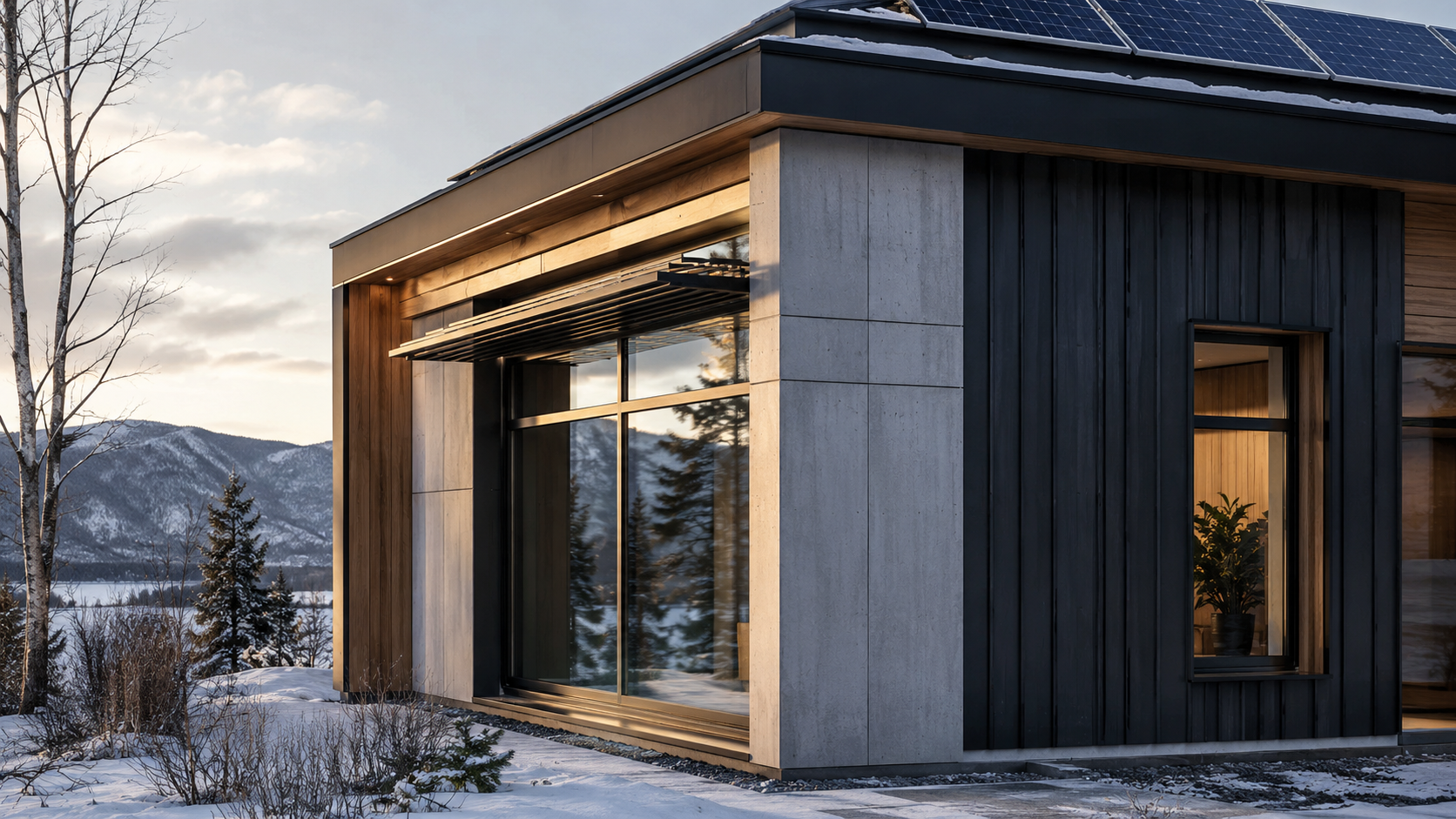
Net-zero begins with passive design.
Sustainability sits at the centre of our architecture practice. On appropriate projects, we apply passive design principles and net-zero targets — not as an aspiration, but as a quantified design objective set at concept stage and tracked through delivery.
01 / SectionA passive building first.
A passive building uses its envelope and orientation to minimise heating and cooling loads. Thick insulation, high-performance glazing, careful detailing of thermal bridges, and disciplined air-tightness deliver dramatic reductions before a single mechanical system is sized.
Industry data show that compared to a conventional building, a properly designed passive structure can reduce heating and cooling energy use by approximately 90%. That is the benchmark — not a stretch goal.
- 01 / LayerEnvelope — insulation, air-tightness, thermal bridge control.
- 02 / LayerGlazing — performance specified by orientation and exposure.
- 03 / LayerVentilation — heat recovery, demand-controlled where appropriate.
- 04 / LayerRenewables — sized against the residual, not the total.
02 / SectionWhole-building energy modelling.
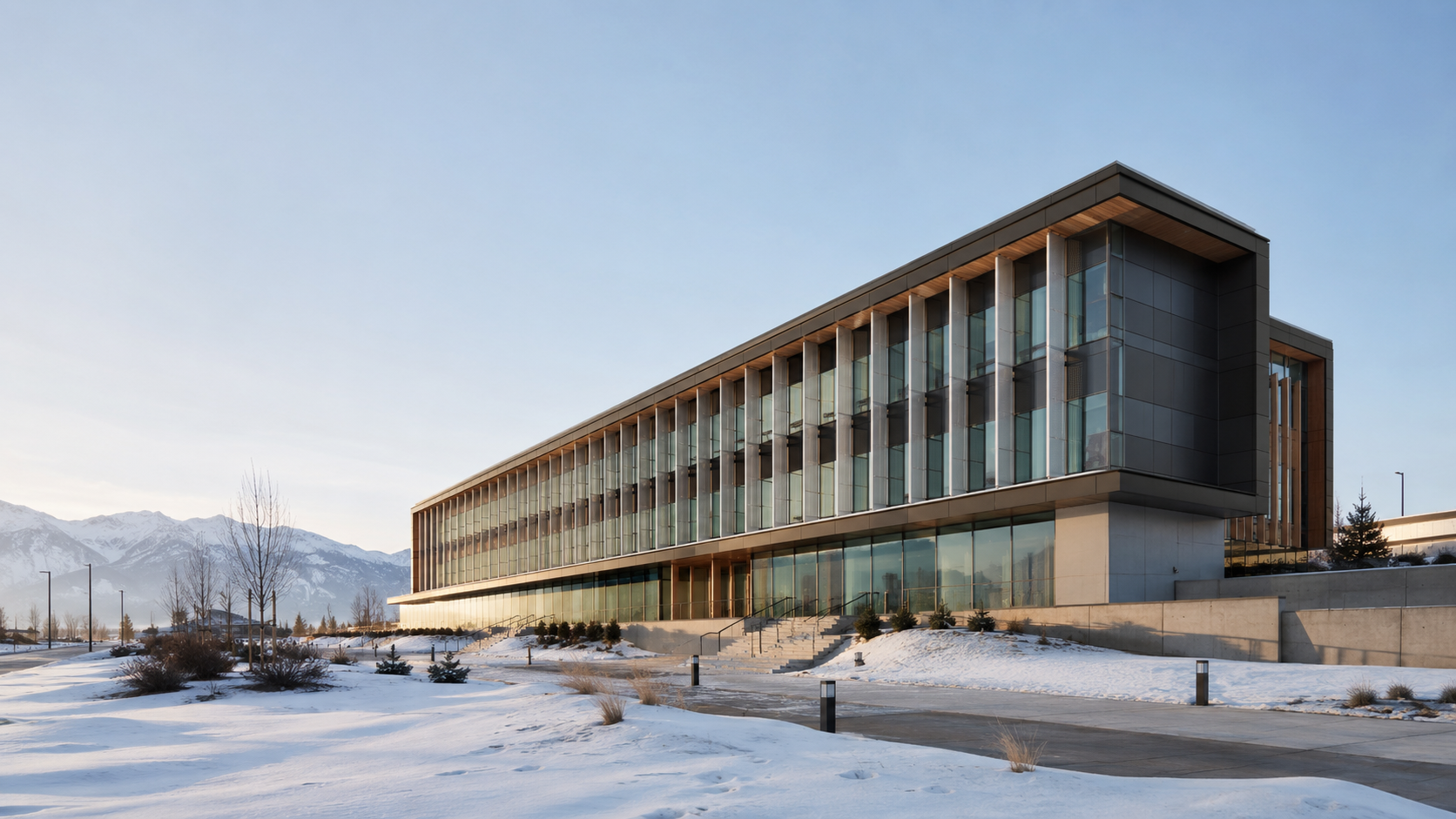
We use dynamic thermal simulations and energy modelling tools to size glazing, shading and ventilation. Annual energy flows are predicted accounting for solar gains, occupancy patterns and local climate. This allows us to commit to strict net-zero targets before construction — and to verify them after handover.
90% reductions before a single mechanical system is sized.
03 / SectionRenewable integration, after the loads are low.
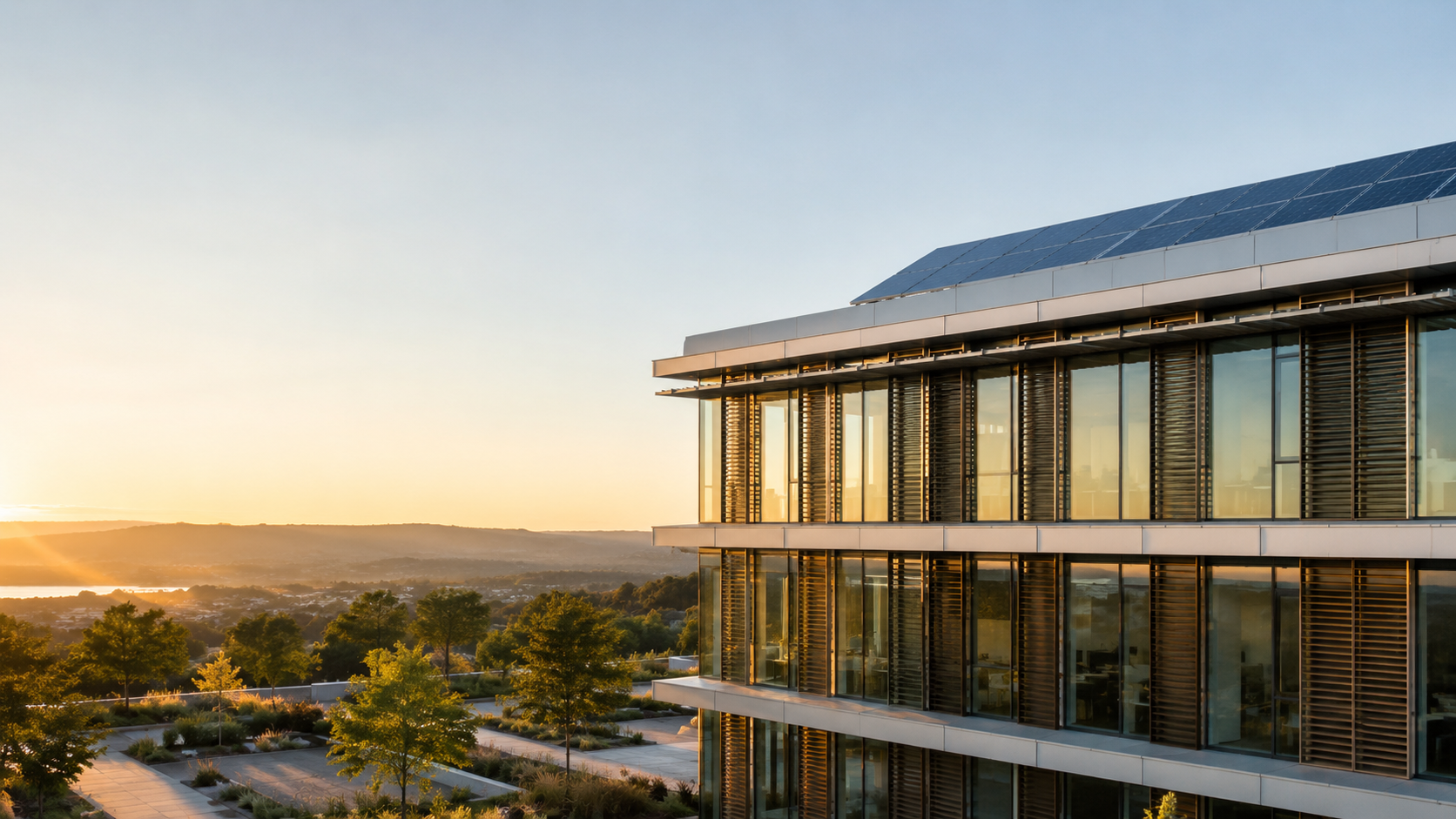
Once loads are low, the renewable system is small, affordable, and effective. Solar PV — and on suitable sites, geothermal heat pumps or small wind — supply the remaining demand. A net-zero building produces, over a year, as much energy as it consumes. The maths is simple. The design discipline to get there is not.
04 / SectionA worked example.
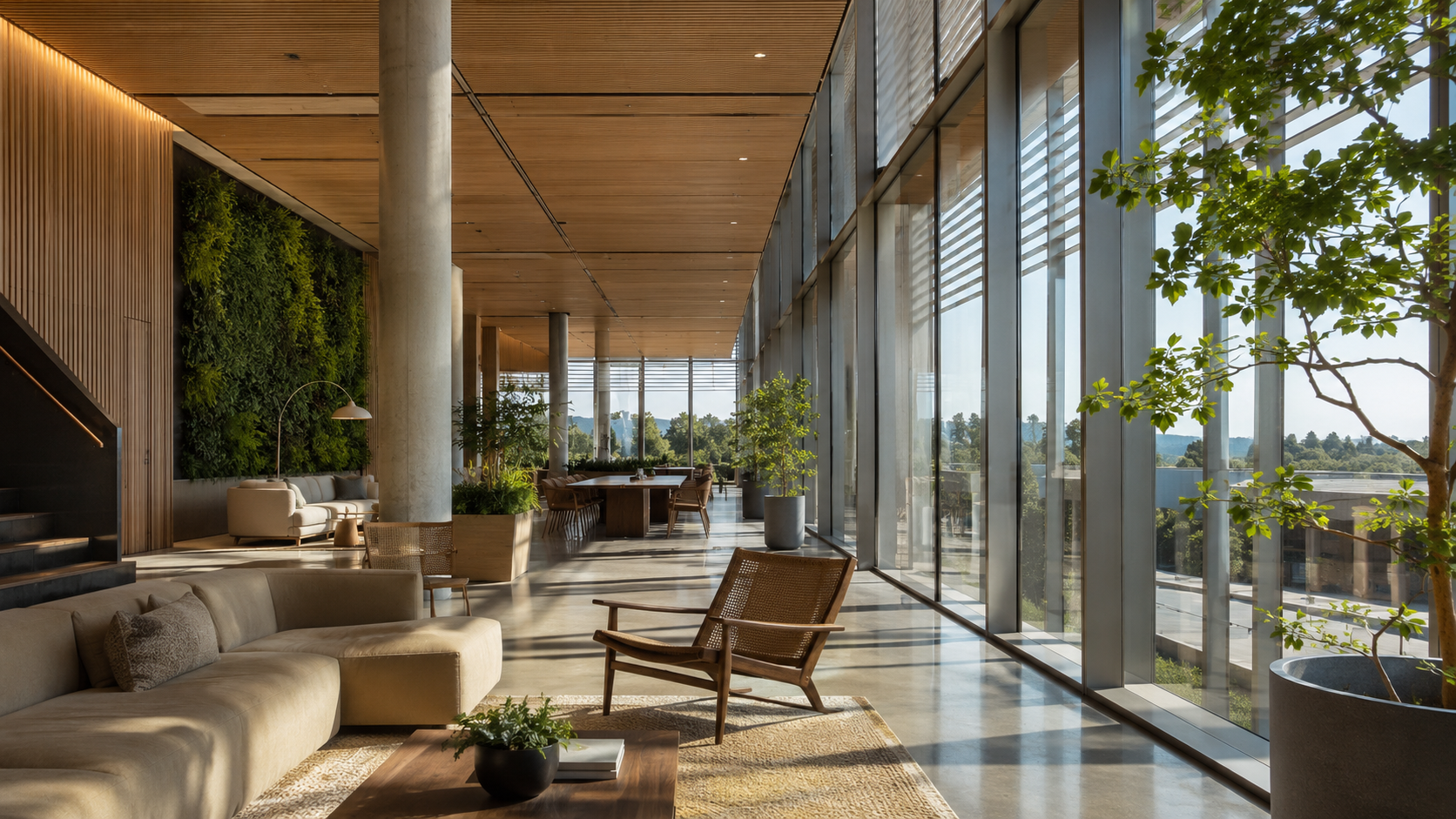
On a recent office project in a northern climate, we combined a 600 kWp rooftop solar installation with a highly insulated structure. The result was a net-zero outcome: annual on-site generation matched the building total energy use.
We present this not as a technical achievement but as a business case. The return on investment from energy savings is often compelling — and the building is protected against rising energy costs for its operational life. At LANE, achieving net-zero is both a technical and a strategic objective.